
FRONTLINE

Most indie games are born from a pitch. GladiEATers was born from a misunderstanding.
Back in 2022, during a long drive, Oliver was lamenting to his friend Tommy that he’d missed the boat on inventing the world’s first creature collector. Tommy, only half-listening, suggested he just make a cooking game instead. Oliver thought he meant a combination of the two. By the time they parked, the vision for a culinary combat sim had already taken root.
It was a natural fit. Oliver had already spent years in the high-pressure world of professional catering, even studying to be a Chef. He knew that food didn’t just have flavor—it had character. But more importantly, he understood the primary ingredient of any professional kitchen: Constraint.
The Heat of the Kitchen

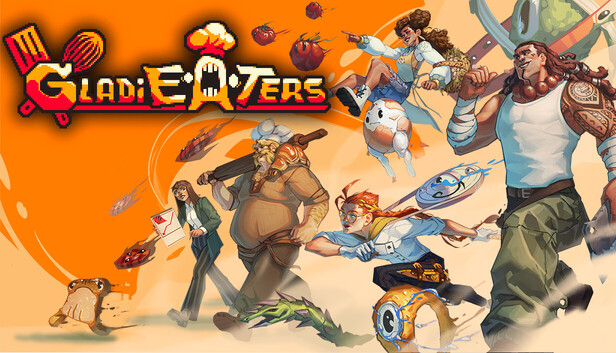
In the world of GladiEATers, the "Creature Collection" loop is reimagined through the lens of a professional line-cook. You aren't just finding monsters in the tall grass; you are preparing them under fire.
This is where the game’s unique Kitchen Phase comes in. In a typical genre entry, "evolving" a creature is a slow, methodical process of grinding for XP. In GladiEATers, evolution is replaced by Resource Investment.
Every player has a strict time limit to "cook" their team before the battle begins. This creates a fascinating tactical trade-off that mirrors a dinner rush:
Do you spend your entire clock meticulously preparing one powerhouse Egg Soufflé?
Or do you "go wide," plating a frantic army of six Unpeeled Boiled Eggs to overwhelm the opponent?
The evolution isn't a permanent stat boost; it’s a choice made under pressure. As Oliver puts it,
Nothing hits harder in a cooking show than when the contestants have to frantically plate some cod and then throw their hands in the air dramatically as if they’re about to be arrested.

Once the plating is done, the game shifts from the kitchen to the arena. Unlike the "single-file" turn-based combat we’ve seen since the 90s, GladiEATers puts your entire team on the field at once.
It plays more like Darkest Dungeon than Pokémon. Your creatures must synergize—a Guacamole might act as a tank, protecting a fragile but high-damage teammate, or setting up a resistance debuff for a teammate to exploit.
To keep the strategy "pure," the team made a bold design choice: No shared move pools. In most collectors, every fire monster eventually learns the same "Fireball" move. Here, every creature has three unique, unchangeable abilities. Each GladiEATer is essentially a unique puzzle for the player to crack, which allowed the team to hand-animate every single interaction with personality.
Betting the Restaurant

The transition from catering to full-time game development hasn't been without its burns. Since the first push to GitHub in January 2022, the project has grown to include a rotating "hoard" of artists and elite talent, including comic artist Rosi Kampe (Marvel/DC) and composer Carlos Eine.
Oliver eventually had to hang up the apron; the demands of development no longer allowed for side catering gigs to keep the lights on. Now, the team is taking a genuine indie risk, surviving on "cold outreach" and the hope that their upcoming demo will "wet people's appetites" enough to sustain their April Early Access launch.
The Verdict
Having played GladiEATers myself, I can say that while it’s a bizarre mix of genres, they work together with a strange, frantic harmony. There is an immense amount of work poured into the presentation, and the story modes—where the various Chef narratives eventually collide—are shaping up beautifully.
Once you stop trying to play it like a traditional monster-battler and start respecting the constraints the game puts in place, you realize the depth of the system. It’s about figuring out how to be a chef in a world of monsters. It’s definitely one to watch as we head toward April.
FOLLOW MILKBUBBLESGAMES AND WHAT THEY’RE CREATING:
The Indieformer Team
Thanks for reading — and if you ever want to chat games, marketing, or the weirdness of the indie grind, we’re always lurking on Threads, BlueSky and X. Come say hi.
We’ve also put together a few free guides to help indie devs get their projects in front of the right people. You can view them anytime: Steam Marketing Guide, Press Kit Guide.